Certified product destruction is the tracked, documented destruction of goods that must never be sold, used or resold, such as recalled items, defective stock, counterfeits, obsolete branded packaging and prototypes. The product is picked up under a chain of custody, destroyed so it can’t be recovered, and recorded so the owner has proof for auditors, insurers and regulators. Brands use it to keep unsellable goods out of resale channels, protect their reputation and show they handled the material properly. Done well, much of what is destroyed can still be recycled instead of landfilled.
Key takeaways
- “Certified” refers to the paperwork: a documented chain of custody and a record that the goods were destroyed.
- The main reasons brands pay for destruction are keeping goods off the gray market, preventing fraud and meeting recall or disposal obligations.
- The destruction method depends on the product; plastics are typically shredded or ground beyond recognition.
- Destroyed product doesn’t have to end up in a landfill. Plastic can become regrind for new manufacturing.
- Get the scope, method and documentation agreed in writing before the first load ships.
What makes product destruction “certified”
Throwing unsellable goods in a dumpster is disposal. Certified destruction adds three things: control over the goods from your dock to the end, a method that leaves nothing usable, and records that prove both.
In practice, that means every load is counted or weighed when it leaves your facility, kept secure in transit, destroyed in a way that makes the product unrecognizable and unusable, and logged with the date, description, quantity and method. At the end you should get a certificate of destruction, which is the document most companies file for audits and insurance claims. We issue a certificate of destruction, set up for what your auditors, insurers or customers need to see, such as dates, weights or counts, and method.
The word “certified” in this context describes that documented process. It is not a single government license, so ask any provider exactly what their paperwork includes.
Why brands pay to destroy product
Keeping goods out of the gray market
Product that leaves your control as “trash” has a way of reappearing. Pallets of returns, defective electronics or retired packaging can be pulled from a dumpster or diverted by someone along the way and end up on discount sites, flea markets or online marketplaces. When customers buy a broken or expired item with your name on it, they blame your brand, not the reseller.
Preventing fraud and counterfeiting
Fraud takes several forms: stolen excess inventory, defective units relabeled as new, fraudulent returns, and seized counterfeits that would otherwise find their way back to buyers. Destroying the goods removes them from circulation for good. Old labels, packaging and branded materials matter too, since counterfeiters can use genuine packaging to make fakes look real.
Meeting recall and disposal obligations
When a product is recalled, the manufacturer or distributor often has to show what happened to the returned units. Some regulated categories, including food, cosmetics and drugs, come with their own disposal expectations from federal and state agencies. A documented destruction record is the simplest way to answer those questions later. We cover food and beverage cases in more depth in destroying expired and recalled products.
Protecting confidential designs
Prototypes, pre-release product, uniforms and tooling samples can reveal a lot about your plans. Destroying them under custody keeps them from being photographed, sold or reverse engineered.
What gets destroyed
The list is broader than most people expect. Common jobs include:
- Recalled or defective product
- Expired goods with a shelf life
- Off-spec or rejected production runs
- Obsolete packaging, labels and branded promotional items
- Returned merchandise that can’t be resold
- Counterfeit or seized goods
- Prototypes, samples and retired uniforms
- Excess inventory that no longer fits the brand
AP&J’s strength is plastic, so plastic products and packaging are where we add the most value, and we also destroy beverages, liquids, cosmetics and other consumer goods. Tell us what you have and we’ll tell you how we’ll handle it.
How the process works
- Scope the job. We look at what the product is, how it is packaged, how much there is and what proof you need at the end.
- Secure pickup. Loads are counted or weighed and documented before they leave your site. For larger cleanouts, a roll-off container can be staged at your facility.
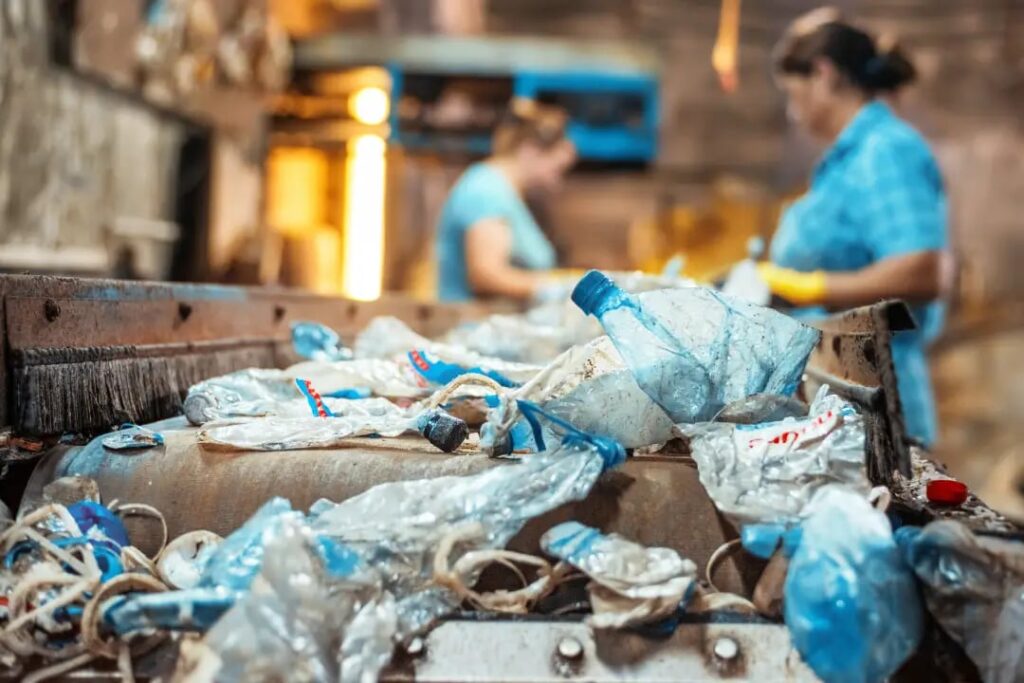
- Sort and inspect. Material is separated by type so each stream goes to the right destruction method and anything recyclable is pulled out.
- Destroy. The product is shredded, ground or otherwise reduced so it can’t be identified or used.
- Recover. Plastic is turned into regrind for molding and compounding wherever the material allows. What can’t be recovered goes to proper disposal.
- Document. You receive records of what was destroyed and how, for your files.
Destruction methods compared
| Method | Best for | Can material be recovered? |
|---|---|---|
| Grinding | Rigid plastic parts, containers, closures, housings | Yes. Clean single-resin plastic becomes regrind. |
| Shredding | Bulky items, mixed packaging, film, textiles | Often. Shredded material can be sorted for recycling. |
| Depackaging | Packaged food, beverages and liquids | Packaging often yes; contents may go to compost or other processing. |
| Incineration or waste-to-energy | Contaminated or hazardous items that can’t be recycled | Energy only, at specialized facilities. |
| Landfill | Last resort for non-recoverable material | No. |
For most plastic goods, grinding does the destruction and the recycling in one step. A molded part that comes out the other side as flake is unrecognizable, and that flake has a second life as raw material.
Destruction and landfill diversion work together
It’s fair to ask whether destroying perfectly good material is wasteful. It can be, if the destroyed goods are simply buried. The better approach treats destruction and recycling as one job: the product is made unusable, then its materials are recovered. Plastic becomes regrind, cardboard goes to paper recycling, and metals go to scrap. That keeps weight out of the landfill and gives you a diversion figure to report alongside your destruction records. If reducing waste is part of your goals, our landfill diversion service can extend the same thinking to your everyday waste.
How to choose a destruction provider
Before you hand over a single pallet, get clear answers on these points:
- How the load is tracked from your dock to destruction
- Where the destruction happens and who has access
- Which method will be used for each type of product
- What happens to the material afterward
- What documentation you’ll receive and how fast
A provider that hesitates on any of these is a risk to the brand you’re trying to protect.
Frequently asked questions
What is a certificate of destruction?
It is a document from the destruction provider stating what was destroyed, when, in what quantity and by what method. Companies keep it for audits, insurance claims and recall records. Ask your provider for a sample before you start.
Can destroyed products be recycled?
Often, yes. Plastic products can be ground into regrind for new manufacturing, and packaging such as cardboard can go to standard recycling. The aim is to make the product unusable while still recovering the materials.
Is product destruction only for large companies?
No. A small brand with one pallet of defective product faces the same resale and reputation risks as a national company. The job is scaled to the volume.
How is destruction different from regular disposal?
Regular disposal moves waste off your site with no tracking or proof of what happened to it. Destruction adds custody, a method that leaves nothing usable, and records you can show to anyone who asks.
If you have recalled, defective or obsolete product that needs to disappear for good, call AP&J at (682) 841-1303 or use our contact form. We’ll go over what you have, what proof you need and how much of it can be recycled. You can also read more about our product destruction service.