Recycling plastic purgings is usually possible, and often worth money, as long as the purge is one known resin, kept away from trash and floor sweepings, and stored by itself. Purge blocks and startup purgings from a molding or extrusion line are the same polymer you paid for as virgin resin, so a recycler can shred and grind them into regrind just like runners or rejected parts. What lowers their value is mixing: two resins in one lump, a commercial purging compound nobody wrote down, or a gaylord that doubles as a trash can.
Key takeaways
- Purgings are recyclable production scrap, not trash. Clean, single-resin purge goes back into regrind.
- Purge from a resin changeover (for example, PP to ABS) is a mix of two plastics and is worth much less.
- If you use a commercial purging compound, record which one. Some are made to be ground and reused, and some makers advise against it.
- Let purge cool fully, keep it in its own labeled gaylord, and keep the floor sweepings out.
- Count purge in your scrap numbers. It costs as much to make as a rejected part.
What purgings are and why every plant has them
Purgings are the plastic a processor pushes through the barrel and out of the nozzle or die without making a part. Operators purge at startup, after a shutdown, during color changes, when switching from one resin to another, and to clear degraded material that shows up as black specks. On an injection press the result is usually a pile of lumps, often called purge blocks, patties or pancakes. On an extruder it can be a long rope or a heavy mass on the floor.
Because purge never becomes a product, plants often treat it as waste and pay to haul it off. A gaylord of natural polypropylene purge from a startup is the same PP that went into the parts, just in an awkward shape. It belongs with your other industrial plastic recycling streams, not in the dumpster.
Count purge as scrap
Many plants track their scrap rate by rejected parts only, and purge never shows up in the numbers. A 2023 Plastics Technology article on purging makes the point that purge piles should be counted as scrap, because they cost as much to produce as contaminated parts. Once you weigh it, purge is often a bigger stream than people expect, especially on lines with frequent color changes. Weighing it is also the first step to deciding whether it should be sold, toll processed or reused in house.
Recycling plastic purgings: which types work and which don’t
Not all purge is equal. Here is how the common types break down. The short version: the closer it is to a single, known resin, the more useful it is.
| Type of purge | What it is | Recycling outlook |
|---|---|---|
| Startup purge, one resin | The same HDPE, PP or ABS you were already running | Good. Ground into regrind like any other clean scrap. |
| Color change purge, same resin | One resin, mixed or streaked colors | Good. Usually ends up in darker regrind, often black. |
| Resin changeover purge | Two different plastics blended in one lump | Limited. Different resins don’t blend well, so value drops. Ask before you ship it. |
| Purge with a commercial purging compound | Resin plus a cleaning compound | Depends on the compound. Tell us the product name. |
| Burnt or heavily degraded purge | Material cooked in the barrel, with carbon and black specks | Poor. Small amounts mixed in are usually fine; a gaylord of it may not be. |
| Purge mixed with sweepings | Purge plus dirt, paper, gloves, metal or wood | Poor. Contamination is what turns scrap into trash. |
If you aren’t sure which resin a purge pile came from, check the job records for that press and shift. Purge from a known resin is far easier to sell than a mystery lump. Our article on which industrial plastics can be recycled covers the resins we see most.
Commercial purging compounds and recycling
Many molders and extruders use commercial purging compounds instead of, or along with, plain resin. These come in two broad types. Chemical compounds break down the old material so it flows out more easily, and mechanical compounds scrub the screw and barrel clean, as the same Plastics Technology article explains.
For recycling, the important thing is that compounds differ. Some are sold as fully moldable and recyclable, meant to be ground with in-house scrap. Others are not meant to go back into parts at all. One compound maker, Chem-Trend, advises against adding its purge compound to regrind for part production, because it can change the physical properties of the finished part.
So before you blend compound-heavy purge into your own regrind, check the supplier’s data sheet. And when you send purge to a recycler, say which compound was used, or keep compound purge in a separate container from plain resin purge. That one label can be the difference between a load that goes into regrind and a load that sits while everyone figures out what’s in it.
How to collect and store purgings so they keep their value
Most of the value in purge is decided at the press, not at the recycler. These habits make the biggest difference:
- Let it cool completely. Hot purge dropped into a gaylord can fuse to other pieces, scorch cardboard and create a fire risk. Cool it on a tray or cart first.
- Purge into smaller, flatter pieces where you can. Flat patties cool faster and are easier to size-reduce than one solid block the size of a bucket.
- Give purge its own container. One labeled gaylord per resin at the press, separate from runners if your runners are cleaner, and never shared with trash.
- Label resin, color and compound. “PP natural, startup” or “ABS black, compound used” on the side of the box saves everyone time.
- Keep the floor out of it. Purge that hits a dirty floor picks up grit, metal and paper. A clean purge pan or tray keeps it sellable.
- Store it indoors or covered. Dry, clean material grinds better and is worth more.
What happens to purge at a recycler
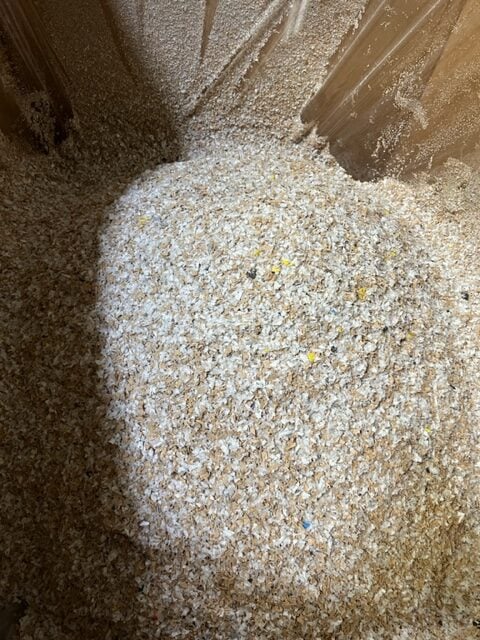
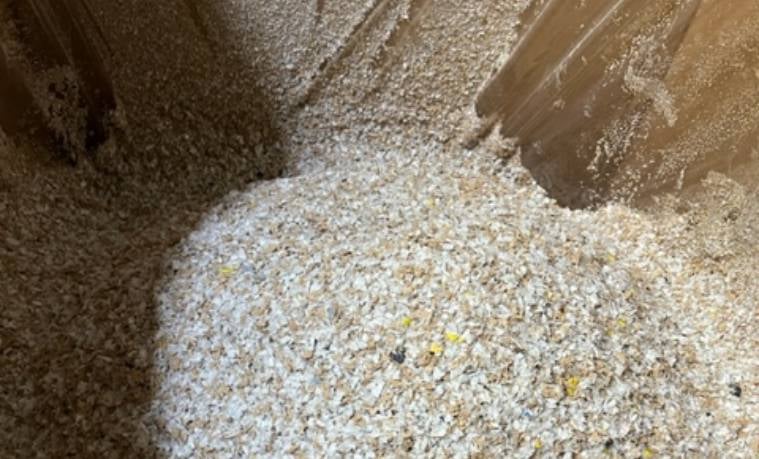
When purge arrives at our Fort Worth plant, we check the load for resin, color and anything that doesn’t belong. Purge blocks are usually too thick to go straight into a grinder, so we shred them first into rough chunks. Those chunks then go through a grinder with a screen that sets the size of the finished regrind. Smaller purge, like thin patties, can sometimes go straight to the grinder. The finished regrind is sold to molders and compounders, or returned to you if you’d rather run it again yourself. Our guide to grinding and toll processing walks through each step.
Sell it, toll process it or reuse it in house?
There are three good outcomes for clean purge, and many plants use more than one:
- Reuse it in house. If you have your own grinder and your parts can take regrind, clean single-resin purge can go back into your process. Your quality team should set the ratio, since it depends on the part and your customer’s specs.
- Toll process it. If you want the material back but don’t want to run thick purge blocks through your own equipment, we can shred and grind it and return it to you through our toll processing service.
- Sell it. If you can’t use it, or it’s a color or blend you’ll never run again, AP&J buys plastic scrap, including purgings in HDPE, polypropylene and ABS.
We don’t publish a price list. What purge is worth depends on the resin, how clean it is, the volume, its form and how it’s packed. Clean single-resin purge in gaylords is worth the most. There’s no minimum for material you bring or ship to us, and every load gets a receiving ticket for your records.
Frequently asked questions
Can plastic purgings be recycled?
Yes, in most cases. Purgings made from a single, known resin such as HDPE, polypropylene or ABS can be shredded, ground and reused as regrind. Purge that mixes two resins, contains an unknown compound or is mixed with trash is harder to recycle and may not have value.
Can we regrind our own purge and run it back in?
Often, if it’s the same resin and clean. Check with your quality team on blend ratios, and if a commercial purging compound was used, check the compound supplier’s guidance first, since some advise against putting it back into parts.
Does AP&J pay for purgings?
We buy plastic scrap, including purgings. What we pay depends on resin, cleanliness, volume, form and packaging, so we look at the material, or photos of it, before we quote.
Is burnt purge recyclable?
A few dark pieces mixed into a clean load are usually fine. A container that is mostly carbonized or degraded material is hard to turn into good regrind. Keep heavily burnt purge separate so it doesn’t pull down the value of the rest.
Find out what your purge is worth
If you have gaylords of purge sitting in the back of the plant, send us a few photos and tell us the resin, how it’s packed and roughly how much you make each month. Call AP&J at 682-841-1303 or reach us through our contact form, and we’ll tell you plainly whether it can be sold, toll processed or neither.