Roll-off hauling means a truck drops a large open-top or compactor container at your site, you fill it, and the truck comes back to swap or remove it. For DFW manufacturers, warehouses and retailers, it is the most practical way to move high volumes of scrap, bulky material and cleanout waste without daily trips or piles on the floor. When the hauler is also a recycler, as AP&J is, recyclable loads such as plastic scrap go to processing instead of the landfill.
Key takeaways
- A roll-off is a large container that a hydraulic truck delivers, picks up and empties on a schedule you set.
- Open-top containers suit bulky scrap and cleanouts; compactors suit lighter, high-volume material.
- Container placement and pickup timing matter as much as container size.
- A dedicated container for one material, such as plastic scrap, keeps it clean enough to recycle.
- AP&J hauls from businesses across Dallas-Fort Worth and North Texas to our Fort Worth facility.
How roll-off hauling works
A roll-off container is a rectangular steel box built to slide on and off a truck. The truck has a hydraulic hoist that tilts its frame and pulls the container up on rails, or lets it roll down onto the ground. That is where the name comes from. Because the container does not need a forklift or crane, it can be set in a parking lot, beside a dock or at the edge of a yard.
A typical service runs like this:
- Planning. We talk through what you will put in the container, roughly how much, and where it can sit.
- Delivery. The truck sets the container in the agreed spot. It needs a clear approach and enough overhead room for the hoist.
- Loading. Your team fills it by hand, forklift or conveyor. Material should stay below the top edge so it can travel safely.
- Swap or removal. On a schedule or on call, the truck returns, picks up the full container and, for ongoing service, drops an empty one.
- Processing. Recyclable loads go to processing. At AP&J, plastic scrap comes to our Fort Worth plant to be ground into regrind.
Container types and when to use them
Container choice comes down to what you are hauling and how quickly it builds up.
| Container | Best for | Things to know |
|---|---|---|
| Open-top roll-off | Bulky plastic parts, drums, totes, pallets, plant cleanouts, construction debris | Easy to load from the side or above; cover it if rain or wind is a concern |
| Compactor | Light, high-volume material such as film, packaging and general trash | Packs material down, so fewer hauls; needs power and a permanent pad |
| Dedicated recycling container | A single clean stream, such as HDPE or polypropylene scrap | Keeping one material per container is what keeps it recyclable |
Sizes are measured in cubic yards. The right size depends on your volume, your space and how often you want pickups, so we will help you pick one when you call. We offer 20, 30 and 40-yard open-top containers, and compactors for sites with a lot of loose, bulky material.
Who uses roll-off hauling in DFW
Roll-offs show up anywhere waste builds faster than a standard dumpster can handle:
- Plastic molders and extruders with steady runner, purge and reject volume.
- Distribution centers clearing returns, damaged goods and packaging.
- Retailers and brands removing obsolete inventory, often paired with product destruction.
- Plants doing a line changeover, warehouse reset or full cleanout.
- Construction and renovation projects on industrial property.
Why container logistics make or break recycling
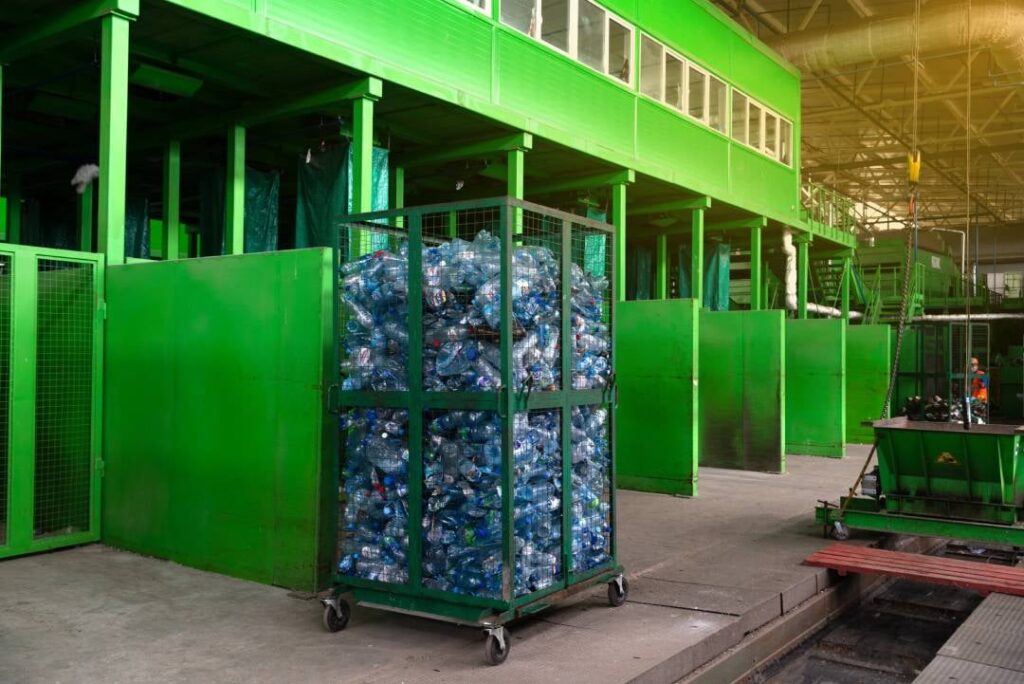
Recycling programs rarely stall because of the material. They stall because the containers are wrong. If a container fills before pickup day, scrap spills onto the floor and gets swept into the trash. If it sits half empty, you pay to haul air. If it is placed across the building from the presses, operators toss scrap in the nearest trash can. In each case, recyclable material ends up landfilled, which defeats the point.
Start with a quick volume check
Before you order a container, find out how much scrap you make in a normal week and in your busiest week, which materials make up most of it, and where in the building it collects. Those three answers decide container type, size, location and pickup frequency.
Put the container where scrap is made
The closer the container is to the press, packing line or dock that produces the scrap, the more likely it gets used correctly. Inside the plant, gaylords at each work area feed the roll-off outside.
Label it and keep it clean
A container marked “HDPE scrap only” with a short list of what does not belong will stay cleaner than an unmarked box. Trash, food, rags and metal mixed into plastic can turn a recyclable load into a disposal load.
Set pickups from real numbers
Weekly service suits some sites; others need a swap every few days, and some only call when full. Use your volume check to set a schedule, then adjust it after a month of actual pickups.
What should not go in a roll-off
Hazardous materials need their own handling and should never go in a standard roll-off. That includes paints and solvents, chemicals, asbestos, batteries, used oil, pressurized cylinders and most electronics. If a load includes anything you are unsure about, ask before it goes in the container.
Choosing a roll-off hauling partner in DFW
Most haulers can drop a box and take it away. The differences show up in what happens after the truck leaves. Look for a partner that:
- Recycles what can be recycled, instead of tipping every load at the landfill.
- Can also handle plastic processing, product destruction and landfill diversion, so you are not managing several vendors.
- Answers the phone and adjusts pickups when production changes.
- Gives you paperwork for each load, so you can track what was recycled.
AP&J is a family-owned recycler based at 990 Haltom Road in Fort Worth. Our roll-off hauling service is built around industrial and commercial customers across Dallas-Fort Worth and North Texas, with trucking scheduled by appointment through our dispatch line, (817) 307-9846, and because we process post-industrial plastic ourselves, your HDPE and polypropylene scrap is turned into raw material for molding and compounding. If you are setting up a broader program, our guide to landfill diversion for businesses walks through the full process.
Frequently asked questions
How do I choose the right roll-off size?
Start with how much material you produce between pickups and how much space you have for the container. A container that fills too fast means extra hauls, and one that is too big wastes space and money. Tell us what you are hauling and how often, and we will recommend a size.
Can recyclables and trash go in the same roll-off?
They can, but the recyclables will usually end up in the landfill with the trash. If you want your plastic scrap recycled, give it its own container. Mixed loads are fine for true cleanouts where nothing is worth recovering.
How often should a roll-off be picked up?
It depends on your volume. High-volume plants may need a swap every few days, while others need weekly service or a call when the container is full. A month of actual pickups usually shows the right rhythm.
Do I need a permit for a roll-off container?
On your own private property, usually not. A container placed on a public street or right-of-way may need a city permit, and rules vary by city across DFW. Check with your city if the container cannot sit on your lot.
Need a container at your plant or warehouse? Call AP&J at (682) 841-1303 or reach us through our contact form, and we will help you choose the right setup for your scrap.