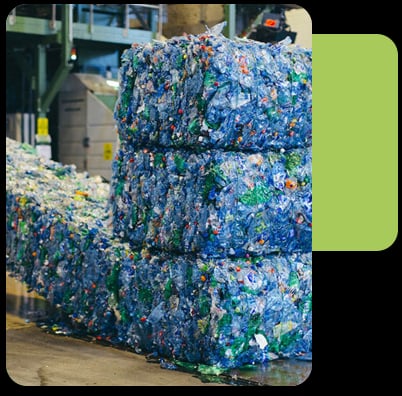
High-density polyethylene is most of what comes through our doors. If your plant molds, blows or extrudes HDPE, you make scrap every shift: purgings at startup, runners and trim, a rejected run now and then. This guide explains what happens to that scrap, which forms we take, and the handful of things that decide whether it is worth more or less.
The short version: clean, single-resin HDPE scrap from a plant floor is one of the easiest plastics to recycle. We sort it, grind it into uniform regrind and send it back into molding and compounding. Keeping resins and colors apart at your end matters more than anything we do at ours.
What HDPE is, in one paragraph
HDPE is the stiff, tough polyethylene used for milk jugs, detergent bottles, drums, pails, crates, pipe and pallets. It carries the number 2 in the resin identification system set out in ASTM D7611. One point from that standard is worth knowing: ASTM says the codes identify the resin and are not “recycle codes”. A 2 on a part tells us what it is made of. It doesn’t tell us the grade, the color or what it has been mixed with, and those decide what the scrap can become.
The Association of Plastic Recyclers, in its design guide for HDPE packaging, describes the resin by two measurements: density, between 0.941 and 0.970 grams per cubic centimeter, and melt index, a measure of how easily the melted plastic flows. Melt index is the one that matters on the plant floor. A resin made to be blown into a bottle flows differently from one made to be injected into a mold, and a molder buying regrind needs to know which he is getting.
Why plant scrap is different from bottle recycling
Most people picture curbside bins when they hear “plastic recycling”, and the numbers there are modest. The EPA’s most recent figures, for 2018, put the recycling rate for natural HDPE bottles at 29.3 percent, and for all HDPE in municipal solid waste at 8.9 percent (560,000 tons recycled out of 6.3 million generated).
Those figures cover household and commercial trash. Scrap from a manufacturing line is a different material in practice. You know the resin and the grade because you bought it. It hasn’t held milk or motor oil. It hasn’t been mixed with six other plastics in a truck. That is why industrial HDPE goes back into real production so reliably, and why it is worth separating instead of sending to the compactor.
The HDPE scrap we take
| Form | Where it comes from | What we do with it |
|---|---|---|
| Purgings and purge blocks | Startups, shutdowns, color and resin changes | Shredded first, then ground |
| Runners, sprues and edge trim | Injection molding, thermoforming, extrusion | Ground directly |
| Short shots, off-spec and rejected parts | Quality rejects, startup parts | Ground; bulky parts shredded first |
| Obsolete parts and packaging | Discontinued products, old inventory | Ground; branded goods can be destroyed first |
| Pallets, totes, crates and drums | Warehouses and distribution centers | Shredded, then ground |
| Regrind you have already made | In-house grinders | Checked and sold on, or blended |
We take it as parts, purgings, regrind, film or bales. There is no minimum for material you bring or ship to us. For larger volumes, ask us about pickup and roll-off hauling.
How HDPE scrap becomes regrind
- Tell us what you have. Resin and grade, whether colors are mixed, what form it is in, roughly how much and how often, and how it is packed.
- Sorting. We sort by resin. HDPE stays with HDPE.
- Shredding. Thick or bulky pieces such as purge blocks, pipe and pallets are shredded so the grinder can take them.
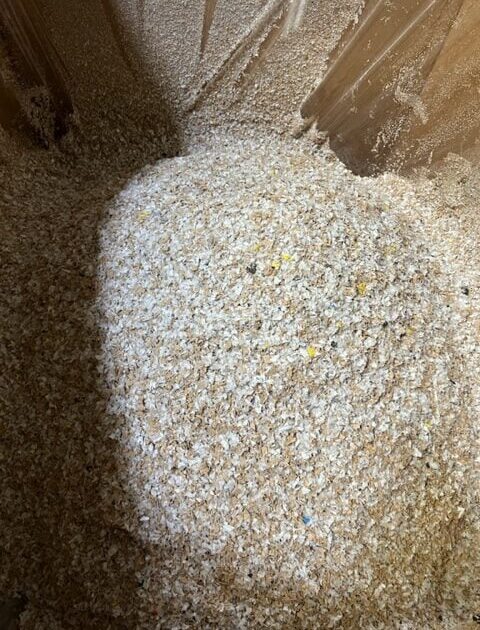
- Grinding. Material is cut against fixed knives until it passes through a screen. The screen sets the size of the finished regrind.
- Checking. Regrind is checked for consistent size and color.
- Back into production. It goes to molders and compounders, or back to you under a toll arrangement.
If you want your own material back, that is toll grinding: we grind your scrap to the size your line needs and return it, quoted by the pound. We can also arrange pelletizing if you need pellets instead of regrind.
What makes HDPE scrap worth more, or less
Resin prices move, and we don’t publish a price list. What stays constant is what separates a good load from a poor one:
| Worth more | Worth less |
|---|---|
| One resin per container | HDPE mixed with polypropylene or other resins |
| One grade, and you can tell us which | Blow-molding and injection grades mixed together |
| Natural (uncolored) or a single color | Mixed colors, which can only become dark product |
| Clean and dry | Tape, labels, metal inserts, wood, floor sweepings |
| A steady stream we can plan around | Small, irregular lots of unknown history |
The reasoning is simple. Regrind is a raw material, and the molder who buys it needs it to behave the same way on every shift. Natural HDPE can be made into any color. Mixed colors can only go darker. Two grades with different melt flow, blended, give a material that fills a mold unpredictably. A bolt in a gaylord can damage a grinder and ends up as metal specks in someone’s parts.
How to store HDPE scrap before it leaves
- Give each resin its own labeled gaylord or container. Write the resin and grade on it.
- Keep natural apart from colors, and colors apart from each other where you can.
- Keep trash, tape, metal and wood out. A lid or a liner helps.
- Keep purgings separate from parts. They are handled differently. See our guide to recycling plastic purgings.
- Tell us if anything has changed: a new resin supplier, a new colorant, a new product on the line.
Questions we hear
Is everything marked with a 2 the same material?
No. The code identifies the resin family. A blow-molded bottle and an injection-molded crate are both HDPE and both carry a 2, and they are different grades.
Do you take colored or mixed-color HDPE?
Yes. Tell us when you call whether colors are mixed. Sorted colors are worth more than mixed.
Is there a minimum quantity?
Not for material you bring or ship to our facility on Haltom Road. Pickup depends on volume and location, so call and we’ll work it out.
Can HDPE regrind replace virgin resin?
In many products, in part or in full, depending on the application and how consistent the regrind is. Our comparison of recycled and virgin resin covers where each fits.
What about HDPE pallets and totes?
We take them. Our guide to plastic pallet recycling covers what to check first.
Have HDPE scrap piling up?
Tell us the resin, the form and roughly how much, and we’ll tell you how we’d handle it. Read more about our industrial plastic recycling service, or call the office at 682-841-1303.
Sources: ASTM D7611, Standard Practice for Coding Plastic Manufactured Articles for Resin Identification; Association of Plastic Recyclers, HDPE design guidance; U.S. EPA, Plastics: Material-Specific Data and Advancing Sustainable Materials Management, 2018 tables. All checked November 23, 2026.